aluminium die casting components
Aluminium die casting components are ubiquitous in modern manufacturing, playing a crucial role across a vast array of industries. Their versatility stems from the inherent properties of aluminium alloys – lightweight yet strong, excellent thermal and electrical conductivity, and good corrosion resistance. These characteristics, combined with the precision and efficiency of the die casting process, make aluminium die casting components the material of choice for countless applications where intricate shapes, tight tolerances, and high performance are essential. From everyday consumer goods to highly specialized industrial machinery, their presence is undeniable, often forming the backbone of critical functionalities.
In the automotive sector, the demand for lighter vehicles to improve fuel efficiency and reduce emissions has significantly boosted the use of aluminium die casting components. Engine blocks, transmission housings, suspension parts, and even structural elements are increasingly being manufactured using this method. Beyond weight savings, the ability to create complex geometries in a single casting reduces the need for extensive machining and assembly, streamlining production and lowering costs. This focus on efficiency and performance makes aluminium die casting components indispensable for the future of transportation.
The electronics industry also heavily relies on aluminium die casting components for various applications. Heat sinks, for instance, are frequently produced through die casting due to aluminium’s excellent thermal conductivity, efficiently dissipating heat from sensitive electronic circuits. Enclosures for computers, telecommunication equipment, and consumer electronics like smartphones and tablets also benefit from the strength-to-weight ratio and aesthetic finish achievable with aluminium die casting. The precision offered by the process ensures a perfect fit and robust protection for delicate internal components.
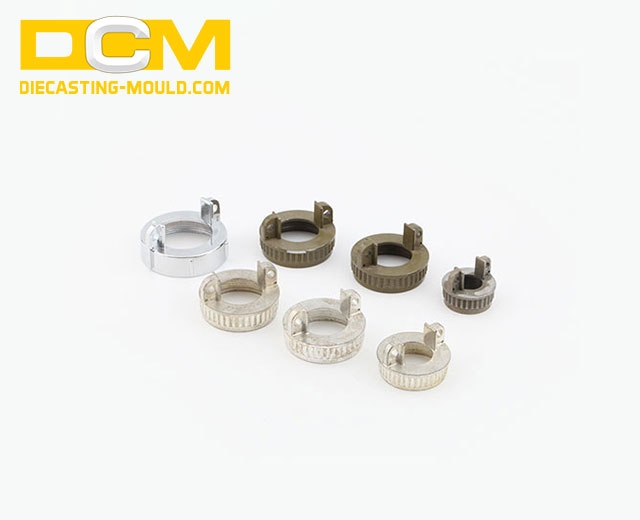
What are aluminium die casting components used for?
Beyond these major industries, aluminium die casting components find applications in household appliances, contributing to the durability and functionality of washing machines, refrigerators, and vacuum cleaners. In the construction sector, they are used for architectural hardware, light fixtures, and various structural supports where a lightweight yet strong material is required. The ability to produce complex and durable parts in high volumes makes the zinc die casting process and its aluminium counterpart highly attractive for manufacturers seeking efficiency and quality.
The medical field also leverages the benefits of aluminium die casting components for equipment like surgical instruments, diagnostic machines, and mobility aids, where sterility, durability, and intricate designs are paramount. Even in the aerospace industry, despite the prevalence of other specialized alloys, certain non-critical structural elements and interior components utilize aluminium die casting for its weight advantages and cost-effectiveness compared to more exotic materials. The adaptability of the process ensures a wide range of custom solutions.
In conclusion, the widespread adoption of aluminium die casting components across such diverse sectors highlights their intrinsic value. Their ability to deliver high-performance, cost-effective solutions with excellent mechanical properties makes them a fundamental element in modern engineering and manufacturing. As industries continue to strive for greater efficiency, reduced weight, and improved sustainability, the role of aluminium die casting components is only set to expand, solidifying their position as an indispensable material in the global economy.